

Working Class Weekly: What’s Driving Working Class Voters Away

We’re back this week with new findings from the largest research effort in the Democratic Party to understand how working class voters are thinking about the 2026 midterms — and what Democrats need to do to earn their votes.
As you know, we returned to working class voters earlier this year across battleground states who have been part of our research effort since 2025. Many voted for Trump in 2024, but they’re soft partisans — exactly the voters Democrats need to win back. We talked with them about the 2026 midterms and tested a range of messages to gauge what, if anything, has shifted.
Focus group participants were given a list of negatives — that were drawn largely from opposition research found by American Bridge’s top-tier research team — and were asked to consider which among the list bothered them most or were most offensive to them, then subsequently asked to discuss why. Here’s what we found:
HEALTH CARE IS TOP OF MIND
Across every group tested, health care messaging was amongst the most impactful in moving voters. These voters know health care costs are rising, they see and feel it in their own families and communities. Many are witnessing, or at least have heard of, rural hospitals being put at risk of closure (even if they do not know those closures because of the Big Beautiful Bill’s Medicaid cuts). There’s a clear opportunity for Democrats to tie those costs to Republican policy choices.
“The cuts to Medicare and Medicaid are terrifying, because children and people with special needs depend on that to survive. Seniors are getting older and with less money and disposable income, and so they need affordable housing. They need access to medical care. Our rural communities are losing hospitals.” – White woman in Iowa
The negatives that landed hardest tied Republican votes directly to gutted health care services, and pairing those cuts with tax fairness messaging proved potent. In Georgia, one of the top testing negatives was a “A Republican who passed a bill that will make the largest cuts to Medicaid and food assistance in history to fund massive tax breaks for the top 1%, including their billionaires donors.” That messaging moved voters. The sense of injustice in that juxtaposition resonated immediately and made it among the most salient topics.
“Why are we giving the tax breaks to the rich, the elite, the ones that don’t have a care in the world?... Why give them tax breaks and take away from the poor folks, the working class, the ones that are barely surviving?” – White voter in Georgia
What’s notable is that this messaging works even when voters haven’t connected the dots to their own lives. Most are aware of the Big Beautiful Bill, but haven’t yet internalized that it gutted Medicaid. But once they’re shown the specifics, they quickly connect it to the real experiences of people in their lives in a way that genuinely moves them.
CORRUPTION LANDS
These voters already believe politicians on both sides of the aisle are corrupt, taking money from special interests and voting to enrich themselves. That preconceived skepticism makes corruption messaging credible for them.
But while these voters see corruption as bipartisan, Democrats have a real opportunity to drive wedges on specific Republican vulnerabilities: stock trading and being in the pockets of Big Pharma and insurance companies.
“Any time a politician takes money from big companies or big organizations, it’s the general public that suffers.” — White man from North Carolina
“Someone that goes into Congress and makes $174,000 a year comes out with a net worth of $30 million — the math doesn’t math for me there. It’s just inherently dishonest.” — White man from Iowa
One of the strongest-testing messages in North Carolina and Iowa involved a Republican’s refusal to pass a stock trading ban. This messaging landed hardest among men, who were otherwise more skeptical of negatives on Republicans.
In Georgia, where the working class voters we talked to are less engaged in stock trading, negatives on stock trading bans and corruption were lower tier, but still moved some voters.
What proved more potent there were negatives that connected self-enrichment to voters’ own cost concerns. A negative that moved voters featured a hypothetical “Republican who supported massive cuts to healthcare and then used insider connections and political donations so their own healthcare business could secure a $694 million no-bid contract funded by Georgia taxpayers struggling to pay monthly premiums and afford life-saving medications.”
Because health care is top of mind for so many voters, messaging that weaves health care and corruption together was especially powerful.
Among the top negative testing messages was “A Republican who took hundreds of thousands of dollars from big pharma and insurance, then voted against capping the cost of insulin and allowing insurance companies to jack up the price of insurance.” Bridging that connection between Republicans enriching themselves and the financial anxieties characterizing working class voters’ daily lives, makes corruption negatives all the more impactful.
TRUMP IS OUT OF TOUCH AND HAS THE WRONG PRIORITIES
Across all groups, there was broad consensus that Trump is focused on the wrong things. Even the most Republican-leaning participants agreed that Trump has the wrong priorities, with the war in Iran being the primary driver of that belief.
But Trump’s economic rhetoric is also doing its own damage, with frustration growing that Trump is out of touch. When shown his comments calling the economy “strong” and declaring a “golden age,” voters reacted with something akin to betrayal. Hearing him describe an economy that bears no resemblance to their lived experiences left them feeling written off. These voters described a sense that he doesn’t care about regular people — just his wealthy friends.
“I feel like the Golden Age probably refers to his friends or people he knows, like Elon Musk and the billionaires and stuff. It probably is like that. But for the average person, it’s not.” – Black man from Georgia
“That’s crock. I’m not calling him a boldfaced liar, but that was a lie. If anybody thinks that inflation is [over], they haven’t gone to the grocery store lately or stepped outside and got gas.” – White man from North Carolina
“The price of beef is absolutely ridiculous. The price of eggs is way up. Food costs are astronomical, and nobody seems to be doing anything about it… Yeah, I think he’s a little out of touch with what’s actually going on with people.” – White man from Iowa
Many of these voters have been inclined in the past to give Trump the benefit of the doubt. Even when his policies were causing chaos, they still held out that they might end up being net-good in the long run — such as with tariffs. But that goodwill is beginning to erode. The disconnect between Trump’s rhetoric and working class voters’ reality is a real vulnerability. Their daily struggles are being denied by someone who they increasingly believe just doesn’t get it.
SPEAKING OF WRONG PRIORITIES: THE IRAN WAR
The Iran war has become one of Trump’s sharpest vulnerabilities with these voters. More than any other issue, it is driving the narrative that Trump has the wrong priorities — and many of these voters don’t see an end in sight.
Trump campaigned on ending foreign entanglements and lowering costs. That’s not what these voters are getting with the conflict in Iran.
“The people can’t make it more than paycheck to paycheck, and he’s worried about the bullies across the ocean.” – White man from North Carolina
“I feel like the goalpost has moved several times. At first, it was just stopping the nuclear weapon, and then it became like, a regime change. And I guess my, I say, my biggest concern is that we end up putting a lot of time, energy, money, soldiers, lives in danger for this, and then we end up either being there a long time or leaving and nothing has really changed, except that maybe Iran is actually a little bit stronger, because they now know that they can control the Strait of Hormuz, which they didn’t know they could do before.” – White man from Iowa
These voters feel the war as an economic issue, they are most upset with rising costs from the war and that tax payer dollars are being used overseas on it. Overall, they are generally fatigued and jaded with foreign involvement and Iran is no different — in fact, it’s a betrayal from a President who campaigned on the exact opposite.
OTHER NEGATIVES WORTH NOTING
Beyond the top-tier cost messaging outlined above, other negatives proved impactful for these voters.
Messaging around Social Security, particularly Republicans cutting Social Security and closing SSA offices while Americans wait months for benefits, resonated strongly.
Among these voters, “spending hundreds of millions of dollars to build a new White House ballroom while Americans can’t afford gas and groceries” landed hard as a symbol of how far removed these politicians are from the people they represent. It isn’t that the White House ballroom itself is the negative, it’s the contrast that it represents between families being stretched thin, while Washington spends money on the wrong priorities. The Epstein files were concerning for voters too, particularly women who were disturbed by messaging around Republicans who voted against releasing them. These issues move some voters, but carry less urgency than the cost pressures hitting people directly.
For women, abortion was a strong negative. Among the top-performing non-cost messages was “A Republican who supports a complete abortion ban with no exceptions for rape, incest, or the life of the mother, and could ban common forms of birth control.” Women responded to this emphatically. For many, it’s less about their personal views on abortion itself and more about autonomy — the fundamental right to make their own decisions about their bodies. As one woman put it: “I don’t say that I would do it myself, but I just want the opportunity to say — for people that incest and rape and other things, you know, and just even women who have to have a D&C and have to go and do it at home because their doctors are too afraid. That’s wrong.”
“[Democrats] don’t want to tell me what to do with my uterus. I don’t care. That’s the thing. Whatever you want to do is your business and your decision. That’s your life.” – White woman in Iowa.
Democrats have largely stepped back from abortion in paid communications in recent years. But it remains a salient issue for working class women who feel their autonomy is under direct threat and see that as a major diverging issue between themselves and the Republican Party.
For men, some of the most resonant negatives were of politicians who are visibly detached from working class struggles — whether that’s blocking infrastructure investment, dodging town halls, or approving a White House ballroom project. Infrastructure in particular landed hard for this group.
WHAT DEMOCRATS ARE DOING ABOUT IT
What we found points to real opportunities for Democrats. These voters are no longer extending Republicans the same benefit of the doubt — they’re watching things get worse, and their frustration is mounting. Democrats up and down the ballot are already honing these vulnerabilities in their campaigns, deploying messaging that speaks directly to the concerns working-class voters are voicing.
Health Care and Medicaid Cuts
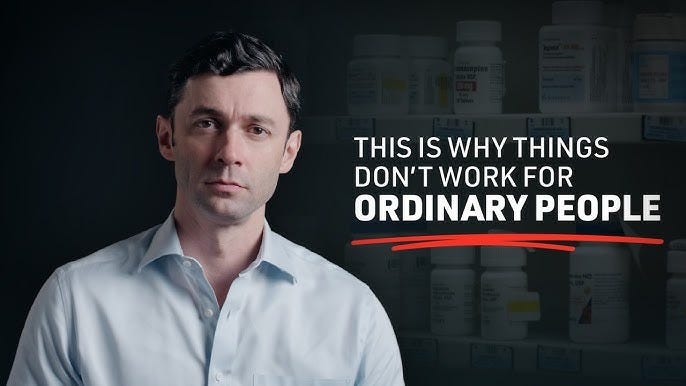
Health care has become the centerpiece of the Democratic effort to retake Congress this cycle. Across the country, candidates are hammering Republicans for gutting working families’ health care to pay for tax breaks for billionaires — pressing exactly the negative juxtaposition our focus groups showed moves voters. Jon Ossoff, Georgia’s Democratic incumbent running for Senate, launched an over four-minute ad exposing Big Pharma’s grip on Washington and his record of fighting back against it — explicitly tying corruption to the higher costs working-class voters are already feeling, a connection our focus groups showed was particularly effective.
The Iran War and Wrong Priorities
Democrats are connecting the Iran war directly to the economic pressures facing working-class Americans, hitting the wrong-priorities sentiment that working class voters are expressing in these focus groups. In Maine, Majority Forward launched an ad hitting Republican Senator Susan Collins for voting to raise health care costs and insurance premiums while backing a war in Iran that is driving up gas prices. House Democratic Leader Hakeem Jeffries and Massachusetts Representative Ayanna Pressley hosted a “Healthcare Not Warfare Day of Action,” explicitly contrasting the cost of the war with what that money could mean for the affordability challenges facing American families.
Corruption and Congressional Stock Trading
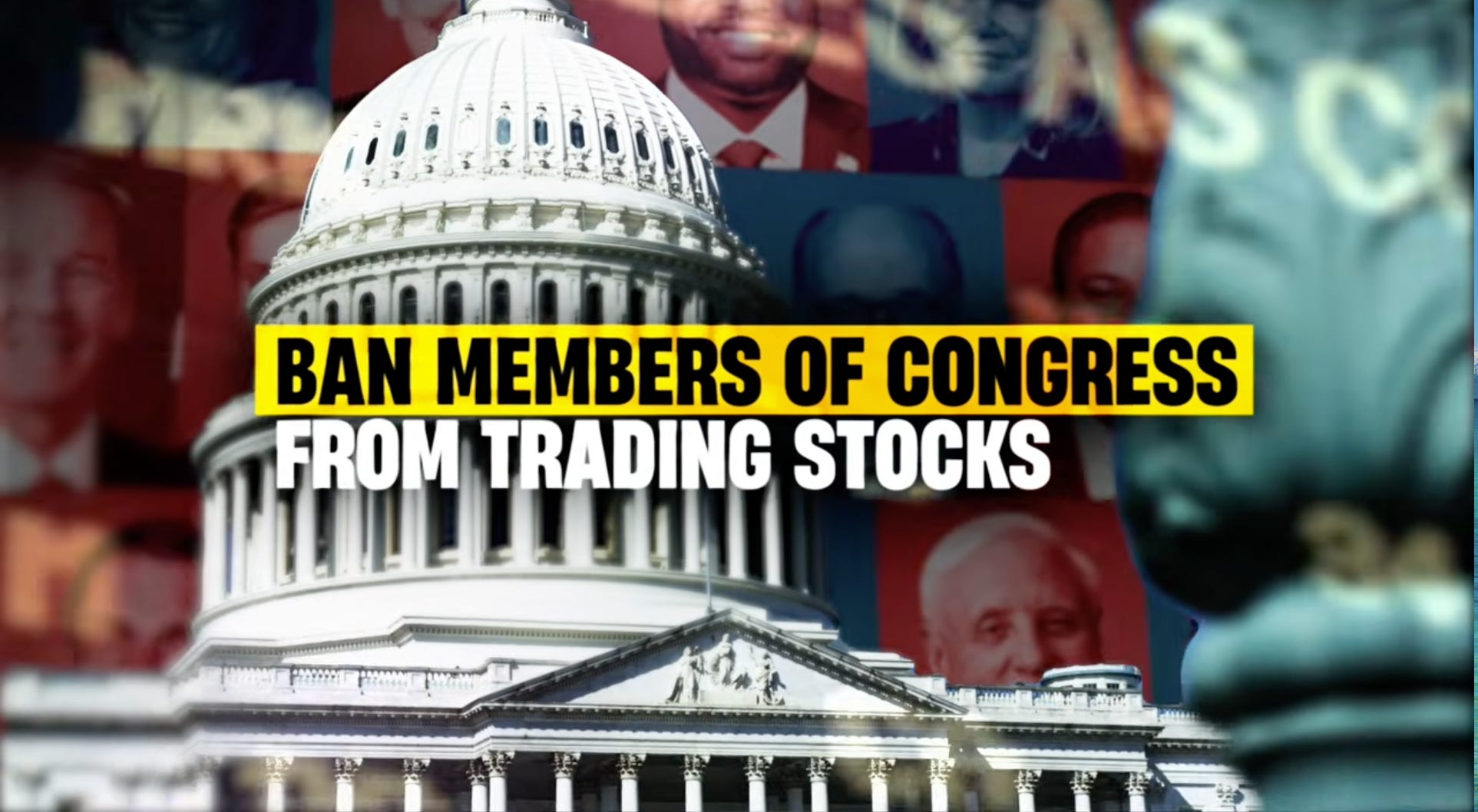
Democratic candidates and allied groups are also making corruption and Congressional stock trading central issues this cycle. Ohio Democrat Sherrod Brown, running for Senate, launched an ad this month highlighting his push to ban stock trades by members of Congress and their spouses.
The Path Forward
In Iowa, American Bridge launched a series of ads last week linking Republican candidates’ votes to slash Medicaid, support tariffs, and back the Iran war with the real-world impact on families across the state. These ads are part of a $50 million campaign spanning nearly 20 key races — driven by research from the Working Class Project and grounded in the daily cost concerns we’re hearing from working-class voters nationwide.
The research indicates that if Democrats can get the message right, they can win back working class voters they’ve lost ground with. The path forward is to press these negatives relentlessly — connecting Republican votes and priorities to the lived experiences voters are already feeling at every chance, and making sure that message breaks through.
When we speak of "tax cuts for the rich", we need to emphasize that not paying taxes is how rich people get rich in the first place. Beginning modestly, they use their earned wealth to influence politicians to lower their taxes in various ways. Of course they also use rent-seeking and financial manipulation, but as their wealth and power increases, so does their ability to control the taxing system itself to privilege them to get even richer. This is a faster way to riches than exploiting labor! It is no accident that when Jimmy Carter began to lower taxes, the Powell Memo was soon to follow with a plan to control the government by the oligarchy. The result is vast income inequality and a trillionaire economy.
I'm really interested in these folk’s attitude/understanding of the influence of Project 2025 and how the Republicans are responsible for letting it all happen.
It's incredibly frustrating to see how many folks still deny that P-2025 is even a thing.
Thanks so much for the work that you do.